Water damage
Ceilings and walls: what the stain is telling you
Water collects above drywall and runs inside walls, so what you see is usually the smallest part. Here is how to stay safe and what each sign tends to mean.
Water, fire & smoke damageCall (844) 990-0433Know this first
How it works
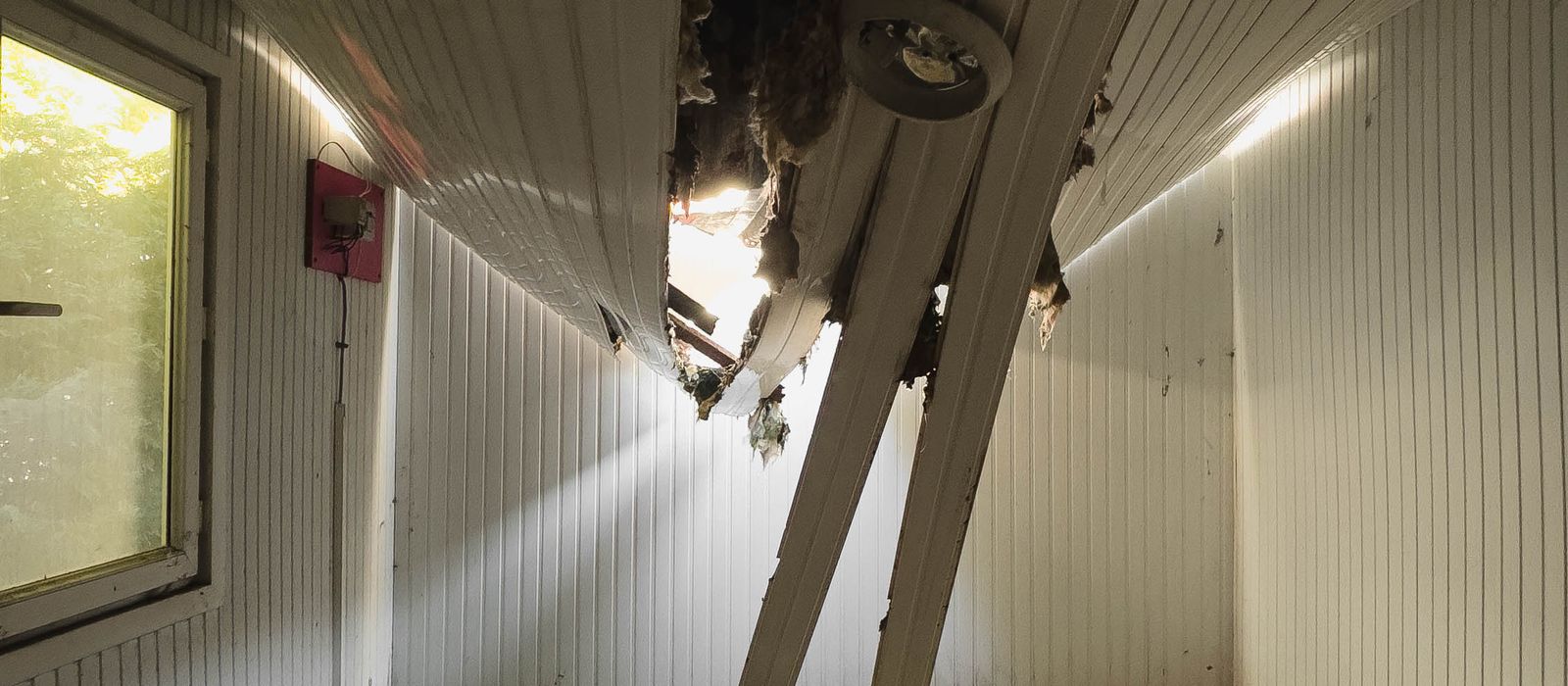
- Drywall soaks up water like a sponge and loses strength when wet. A sagging or bulging ceiling can hold a lot of water and come down without warning.
- Water follows framing, pipes and wires, so the stain can be several feet from the actual leak.
- Insulation and framing behind the surface stay wet long after paint feels dry, which is why restoration crews measure with moisture meters and thermal cameras.
What happened?
Ceilings & walls: 4 guides
FAQ
Questions people ask
Is a sagging ceiling dangerous?
Yes. Keep everyone out from under it. Wet drywall can drop suddenly with the water it is holding.
Why is the stain far from the bathroom?
Water runs along joists and pipes before it soaks through, so it can appear well away from the source.
Will a stained ceiling dry by itself?
The surface may, but insulation above it can stay wet for days. A moisture check tells you what is really going on.
Can I paint over a water stain?
Only after the leak is fixed and the material is confirmed dry, and with a stain-blocking primer. Otherwise it comes back.
Does wet drywall always have to be replaced?
No. Drywall wet with clean water and dried promptly can often stay. Drywall that crumbles, sags or was hit by dirty water usually comes out.
What is a flood cut?
Removing the bottom section of wet drywall, often the bottom 2 to 4 feet, so the wall cavity can dry and be checked.
Other categories
 Pipes & leaksBurst and frozen pipes, slab leaks, leaks inside walls and failed supply lines.5 guides →
 Appliance leaksWater heaters, washers, dishwashers, fridge ice makers and AC drain lines.4 guides →
 Basements & crawl spacesFlooded basements, sump pump failures, seepage after rain, wet crawl spaces and window wells.5 guides →
 Storms & floodingStorm water in the house, flash floods, hurricanes, roof leaks in storms, ice dams and returning after a flood.6 guides →
 Sewage & dirty waterSewage backups, toilet overflows and floor drain backups.3 guides →
 Drying & moldMusty smells, mold after a leak, wet carpet, wet hardwood and wet papers and photos.5 guides →